


What is Chai?
Chai is a Hindi word derived from the Chinese word “cha”, both of which translate to mean tea. Chai, in the way we know it, is actually “masala chai” which means spiced tea. While recipes can vary, the traditional ingredients stay relatively the same. It begins with a strong black tea base full of powerful spices like peppercorns, ginger, cinnamon, cardamom, and cloves. Everything then simmers boldly in milk with sugar or even honey.
The History of Chai
Anciently, chai didn’t include tea from the Camellia Sinensis plant at all. It was simply a mixture of herbs and spices derived from the ayurvedic practices of the day. Its creation came by royal decree of the king who wanted a spiced healing tonic. Quickly, the popularity of the tonic spread across India adopting different variations of spices depending on the region. Black tea, milk and sugar only joined the recipe in the last two hundred years. With the takeover by British imperialism, a merging of cultures occurred. The English’ love of strong black tea melded with the coveted spiced drink of India.
The Anatomy of a Good Chai
Again, when we are talking chai we really are talking about spiced tea. Depending on the region, culture, or family preferences, the recipe can widely vary. So, let’s get into the basic traditional ingredients and then talk about a few of their variations.
Tea: Black tea was the favored beverage of the British Empire which had a profound influence on Indian culture. Chai commonly uses black Assam and Darjeeling, since both are native to India. While this may be the most popular, you may also find herbal chai options, such as our Chai Spice Yerba Mate and Red Bush Chai Rooibos.

Spices: The traditional spices include ginger, peppercorns, cinnamon, cardamom, and cloves. These were the traditional spices because they were the most plentiful within the region. Yet, other ingredients have since emerged offering new and exciting variations of the traditional beverage. These include additions such as vanilla, nutmeg, star anise, or fennel.
Milk: Traditional Indian chai uses milk, and more specifically buffalo milk. Buffalo milk is higher in fat, protein, lactose, vitamin, and minerals than cow’s milk. It also has a thicker consistency and tends to be whiter. The use of cow’s milk and other dairy and non-dairy kinds of milk is more than acceptable considering that what most of in the west have access to and/or prefer. However, each variation changes the experience slightly. And, of course, you can also make chai without milk.
Sweetener: You can always take your chai without sweetener, but it really does make for a blander experience. The added sweetener will not mask the spices and flavors rather it will elevate them making them more pronounced. The most popular method is to use unrefined cane sugar. You can also use white or brown sugar, along with honey or even coconut.
A Myriad of Chai Options

Masala Chai Black Tea
We blend this traditional masala black tea from India with ginger, cinnamon, green cardamom, and natural flavors. This tea is at its best when you make it the way India does. Simmer equal parts water and organic milk, throw in your tea, and continue to simmer. Add some sugar, strain into tiny cups, and enjoy.

Spiced Apple Chai Black Tea
This chai is a juicy rendition of a masala chai. Think of it as a spicy apple cider black tea. With classic chai ingredients like cinnamon, ginger, cardamom, and cloves and the addition of orange, apple pieces and natural flavors. Add some vanilla sugar and some milk.
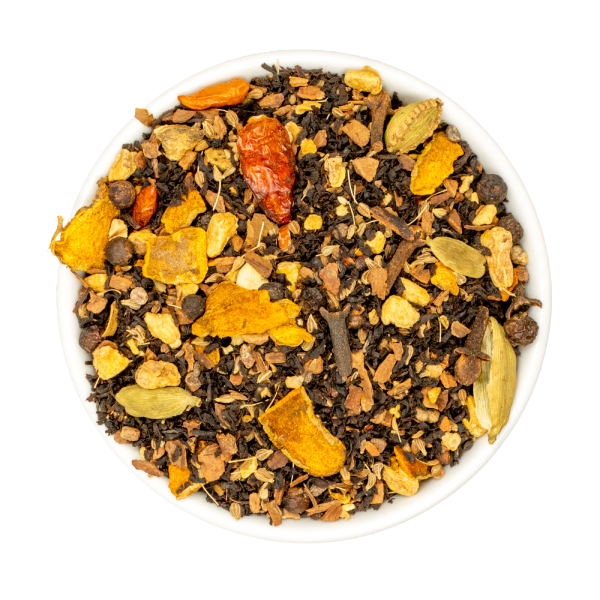
Turmeric Chai Black Tea
Another unique blend of chai flavors with the added earthy, peppery spice of turmeric, along with aniseed, chili peppers, cinnamon, ginger, cardamom, cloves, and peppercorn. A perfect brew with a little almond milk and vanilla sugar.


